April 08, 2014

Wal-Mart Shoppers Prefer Amazon Over Wal-Mart's Own Website

Click here to enjoy this article.

Anybody who has ever analyzed inter-channel dynamics knows a fundamental truth. The fundamental truth is this ... there are two types of retail businesses.

  1. Direct-Centric Retail Businesses.
  2. Retail-Centric Retail Businesses.
Retail-Centric Retail businesses struggle with direct channel sales ... sales totals that are frequently 15% or less of total net sales, on an annual basis. Most often, these businesses have an outstanding retail in-store experience. Wal-Mart counts - you may despise their business model, but they have a wide array of merchandise at everyday low prices. The Wal-Mart shopper doesn't need to shop the website, because the customer goes to the store. But the Wal-Mart shopper needs Amazon for different reasons.

If Wal-Mart were a direct-centric retail business (i.e. 30% or more of annual sales via the direct channel), then this story would have meaning. But the very reason Wal-Mart is not a direct-centric business is because they execute so darn well in stores.

The better the in-store experience, the worse e-commerce penetration typically is ... the customer doesn't need to shop the website ... the customer wants to shop in-store.

Analyze your own retail business, you'll see this truth repeat, over and over and over again.

April 07, 2014

Selling Your Catalog Business?

Many of you hired me to execute a Contact Strategy project (click here for the booklet on Amazon).

But increasingly, the Contact Strategy project is used as a tool for helping a seller, or to help a potential buyer understand the profit potential of an acquisition target.

Well, there's no need to go through a full Contact Strategy project, if the goal is to understand the profit potential of a modified catalog contact strategy.

Click here for project pricing - notice the new Catalog Seller / Private Equity Evaluation row ... this is the cost for subsequent projects, should you be looking to sell / buy a catalog / e-commerce / retail business and want to understand the profit opportunity available by changing the company catalog contact strategy.

Also notice how inexpensive it is to conduct a Merchandise Forensics project (click here for the text from Amazon). I'm working on a Merchandise Forensics project as we speak - it's the most popular project in my seven years of consulting.

Omnichannel: Birchbox

Speaking of recurring revenue streams, click here to see Birchbox.

Weirdly, innovation is happening among Baby Boomers, and younger shoppers.

Among Baby Boomers businesses, I've witnessed a ton of innovation designed to squeeze every last dollar from customers who are about to retire. It's all "gaming the pricing system", if you will - it's not remotely a merchandise-centric revolution. Honestly, it's stunning. Not what I would do, but it sure is creative.

Jennifer-centric businesses just seem petrified of Amazon. It's hard to innovate when you're scared ... it's the "Maslow's Hierarchy of Needs" thing.

Jasmine-centric businesses like Birchbox are inventing the future ... most will fail, some will succeed wildly.

None are going to execute the omnichannel playbook as currently prescribed. Instead, they'll create the rules for their generation of customers.

April 06, 2014

Monday Mailbag

As always, you can email your questions (kevinh@minethatdata.com) or sent them via Twitter (@minethatdata) ... the latter seems to be the most popular method.

Today's question comes from Colton:

  • "You probably read that Neiman Marcus is integrating their online and store teams. Do you agree that this is likely to result in a favorable omnichannel outcome?"
My answer - no.

Asking store and online employees to work together is like asking in-laws to spend all their time together, not just at Easter.


I created this thing two years ago, and for good reason ... our industry loves to focus on mechanical, tactical topics. "If we simply aligned stores and online channels, we could be more effective and please our customers."

Barf.

The issue, of course, is that people simply don't get along. We're only human, of flesh and blood we're made, to quote a song from the 80s.

Humans disagree. Sometimes they despise each other. Or they love each other and support ideas for each other that are meaningless to the customer. People hold grudges. They dig their heels in on principle. They don't like it that the online exec gets paid more and is responsible for 1/6th of the sales volume. They don't like it that the store exec gets a car allowance and doesn't have to be on call at 2:45am when the website goes down. Neither exec likes it that the IT executive always tells them "no". Merchants hate everybody for not working hard enough to sell merchandise. Everybody else hates merchants for being arrogant. Nobody wants to partner with the marketer who wants to spend $11,000,000 creating awareness.

Does any of that resonate with you?

Org structures can be a lot like shuffling deck chairs on the Titanic. Org structures do not address the core issues among employees.

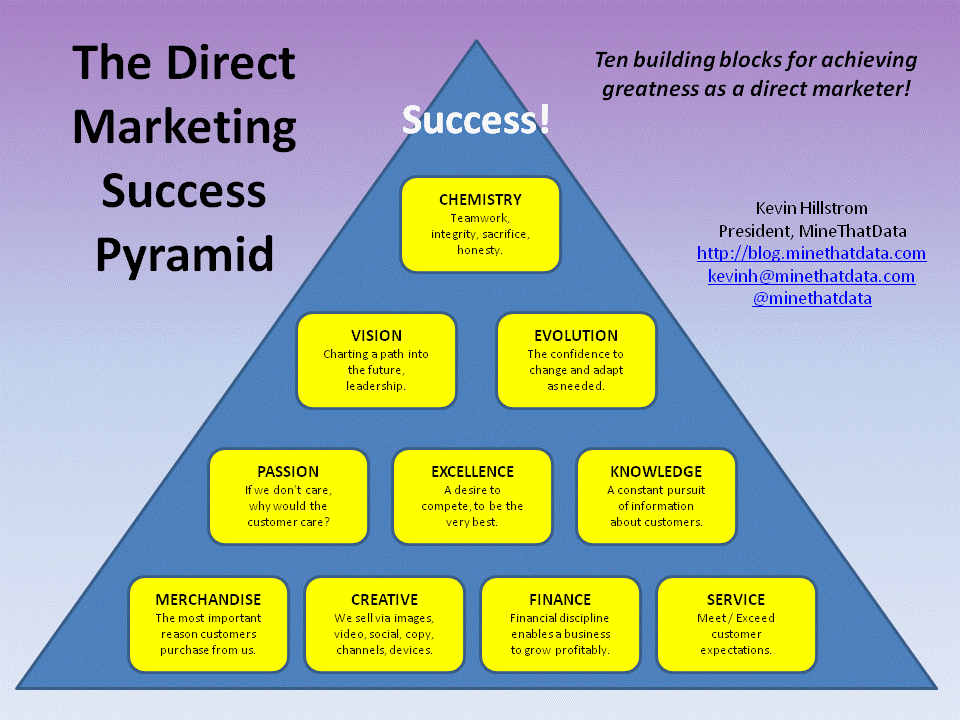
The best "managers" know this. They create circumstances that foster team chemistry. 

It makes no difference how you structure online and store employees. It makes all the difference how gifted managers get people to get along and support each other.

This is what we need to talk about ... people ... not channels.

April 03, 2014

Omnichannel: La Gran Plaza

Give this ditty a read (click here).

How does the last paragraph begin?

  • "Hispanic-Oriented entertainment is a huge component ..."
Entertainment.

Omnichannel is not going to be a sterile concept about using a retail store as a digital fulfillment center for a boring e-commerce website.

Nope.

Retail must entertain. With way, way too much square footage and a modest amount of online competition, there's absolutely no reason for a customer to get in a car, drive somewhere, and be bored out of their minds by products that are readily available on a mobile device anywhere in the world!

Seriously. Think about the message. Jennifer gets in her car on a Saturday afternoon, drives twenty minutes to a local shopping center, finds parking, and makes her way to her favorite Ann Taylor store, where she quickly learns that the Modern Shrug she wanted (click here) is not available in her size. She invested an hour or more of her time to find out that her retail store didn't think highly enough of her to stock her size/color combination ... a size/color combination that was represented to her on the Ann Taylor website just two hours earlier. What is the omnichannel solution? Have a woefully under-compensated sales associate walk over with an iPad and offer to get the item shipped to the customer from another store, from the website, or to have the item available for pickup at another store?

Put yourself in Jennifer's shoes. That's not a solution, that's an irritation!

I know, I know, Ann Taylor should make sure that Jennifer knows on the website that the size/color combination is not available in her local store, so that Jennifer never gets in her car and visits the store in the first place. Yup - that's an operationally elegant solution - but think about it - it's a solution that keeps Jennifer out of the store, and ultimately, reduces store traffic, which reduces store buzz, which causes anybody in the mall to say that "there's absolutely nobody shopping in the Ann Taylor store, why should I bother to go in there?"

That's the cold, sterile path that the current iteration of omnichannel offers us.

At La Gran Plaza, customers are entertained.

We're going to have to figure out how to entertain customers. 

Omnichannel is easy, compared to figuring out how to entertain a customer enough to get the customer to get into a car and drive twenty minutes to a store.

We have to figure out how to entertain a customer.

Entertainment fuels engagement. Engagement is like free marketing. As Glenn Glieber might say ... "I love free marketing!"


April 02, 2014

Omnichannel: BaubleBar

Give this little ditty a read (click here), about BaubleBar opening up pop-up shops in Nordstrom stores.

I know, I know, I'm biased because I once worked at Nordstrom.

Our definition of what "omnichannel" is ... is way, way too narrow, isn't it? We're on the third step of a thousand step journey. So yes, omnichannel is real, don't get me wrong, but it is not what we're being told it is.

I'm hard on words like "omnichannel" and "engagement", largely because they are words that are defined to make consultants and vendors money. But the words are very real for our businesses, especially if we view the words in context.
  • Redefine "omnichannel" as "innovative selling".
  • Redefine "engagement" as "entertainment".
Back to BaubleBar. I talk about "innovative selling. Here's an example ... click on this link, where BaubleBar explains how, on Friday and Monday, they secretly mark down an item and you have the opportunity to subscribe via email to get clues delivered to your mailbox. That's a clever marketing tactic, isn't it? They created a reason for customers to visit the website twice a week. That's innovative selling. Opening pop-up shops in Nordstrom stores is also considered "innovative selling". Will it work? Who knows? At least they're willing to take a risk.

Engagement is a byproduct of innovation. If we innovate, then our customers interact with us. We shouldn't strive to manufacture engagement, we should strive to entertain our customers so that they spend money with us (important) and so they are willing to communicate with us and about us (engagement).

April 01, 2014

Omnichannel: Coldwater Creek

By now, you've had the opportunity to read this little ditty about Coldwater Creek preparing to file for bankruptcy (click here).

This just makes me feel really, really sad.

Mind you, the pundits told companies like Coldwater Creek that there were unfettered riches available by going "multi-channel" ... and now, by going "omni-channel" ... sharing "data-driven" arguments like the one below.


So Coldwater Creek followed the prescription, to the letter. A catalog brand branched out into e-commerce, then dove, head-first, into retail ... as they were told to do ... "bricks 'n clicks, right?"

It doesn't look like Coldwater Creek ever experienced the promised "multichannel bonanza". Will the experts take accountability for bad advice?

What does this say about modern-day omnichannel initiatives?

I know, I know, the pundits will say that Coldwater Creek invested poorly, that they mis-timed the market, that their merchandise was the same as what everybody else sold, that there wasn't a buzz in the stores ... blah blah blah blah. Excuses. They'll say it wasn't their fault, they'll say that omnichannel works wonders when you do everything else right. Which, of course, validates the hypothesis that you should focus on everything else, right?!

At the start of 2014, I told you I was going to focus on three things:
  • Merchandise.
  • Service.
  • Story.
I keep analyzing projects where it is very easy to see the merchandising missteps. I doubt this will ever change. It's easy to see +10% or +20% gains achievable via sound merchandising strategies and a solid merchandising / marketing partnership.

And "story" has really evolved for me, in 2014. Story increasingly becomes more centered around "entertainment". If the customer is entertained, then the customer is willing to step away from the computer or mobile device and visit a store. If the customer is entertained, then the customer "engages" with the brand ... engagement is the byproduct of being entertained, it's how we measure that the customer has been entertained (or satisfied).

But the sterile, cold, operations-centric, fulfillment-centric omnichannel story we're being sold? Well, Coldwater Creek offers us yet another data point that customers don't value multiple channels, for if they did, Coldwater Creek would be thriving.

The Worst Long-Term Customers to Acquire

From tomorrow (November 25) to December 5 ... it might be the easiest eleven days to acquire a customer. You'll give away everything ima...