August 31, 2023

Heading Into Fall

In the 70s, your Labor Day Weekend might have been dominated by watching the Jerry Lewis Labor Day Telethon. Would they get over $30,000,000? There was only ten minutes to go and they were at $28,000,000 ... then they got to $29,200,000 with five minutes to go ... then $29,800,000 with three minutes to go ... and then WOW they got to $31,300,000 ... THEY DID IT!

Yeah. The stone ages.

The 1976 telethon drew 85,000,000 viewers. As a percentage of the population more people watched the 1976 telethon than watched the Super Bowl last year.

Those were the days of a monoculture.

You don't run a business that operates in a monoculture. You have your customers and your zealots and virtually nobody else has ever heard about you or cares about you. You can run a $200,000,000 business with the average customer spending $100 per order buying 2 times per year and that means you have 1,000,000 annual customers out of a population of around 330,000,000 individuals. A huge business ... a tiny fraction of the population.

Based on your comments, a big focus for the rest of the year is nailing down what 2024 will look like. You want to know how much to spend to achieve the size of business and amount of profit that your Owner or Board of Directors or CEO aspire to. Some of you are growing nicely and want to measure your upside. Others are struggling. Either way, you need forecasting guidance.

I am working on one Marketing Budget Experiment in September and another one in October. I can perform about three of these per month, to be honest. So if you need forecasting help for 2024 that aligns with how many marketing dollars you should spend annually to achieve sales/profit objectives, contact me now and let's get busy (kevinh@minethatdata.com).

August 30, 2023

The Power of a Marketing Effort

I've told you this story before, but it bears repeating.

It's 1998, and I'm working at Eddie Bauer. A marketing campaign-centric brand. We had thirty "events" each year (out of 52 weeks). In essence, there was a campaign every-other-week.

We had an Executive who told me that the thirty campaigns demonstrated "the power of a marketing effort". It was one of those moments of pure gibberish. The statement sounded dynamic and meaningful in a meeting. But come on.

Back in 1998 I was highly motivated by disproving gibberish (maybe times don't change). So I forced my marketing team to conduct an experiment. For the next twenty-six weeks, a random sampling of our customer base would not receive a single marketing promotional campaign. We'd keep bulking up the catalogs ... but the marketing campaigns ("It's Summer Sale, take 50% off") were removed. No campaigns. If "the power of a marketing effort" was true, we'd see it in the test results.

Here's what the test results looked like.
  • Control Group (Campaigns):  Sales per Customer = $25.00. Profit/Customer = $5.00.
  • No Campaigns:  Sales per Customer = $25.00. Profit/Customer = $7.50.

In other words ... there was no "power of a marketing effort". 

Marketing campaigns at Eddie Bauer had no meaning to the customer. It was just an endless array of gibberish that the customer ignored.

There wasn't a soul at Eddie Bauer that believed my results. I didn't care. I had to prove to myself how feckless most marketing efforts are.

Recently a client told me that they executed a holdout test and found out that 93% of sales were organic and not driven by the catalog. They discontinued the catalog. The customer didn't even notice. The client was much more profitable as a consequence.

If you take away a marketing activity and sales don't change, you know that there was no power in that marketing effort.

By and large, most marketing campaigns cannibalize each other ... rendering each other meaningless. You're free to disagree with me.

August 29, 2023

Gibberish

Your marketing world is filled with non-stop gibberish ... empty words designed to capture your attention and separate the money in your marketing budget from your company.

"You need to surprise and delight your customer."

  • Seriously, what would it actually take for you to surprise and delight your customer? What specifically could the Vermont Bean Seed Company actually do to surprise and delight you? Be honest.
  • Want an example of surprising and delighting a customer? I was playing at a pickleball tournament on Saturday and the guy at the food stand saw one of the players gulping air while holding an empty soda cup and said to the woman ... "I'll fill that for you for free." That surprised and delighted the player. Your CFO isn't going to let you give away anything of meaning that costs virtually nothing.
"You need a 360 degree view of today's savvy consumer to be effective."
  • I'm sorry, I just threw up a little bit in my mouth. Wait a moment. Ok. What specifically would you do differently if you had a "360 degree view" of your customer? The answer is important, because if you know the answer, you'd have already implemented the idea via better data because it would be important to you and your customer, right?
"Omnichannel customers are the best customers."
  • If this is true, why did Amazon thrive while mall-based retailers died? These omnichannel sentences exemplify robust word salads of nothingness. Empty digital calories.
  • If this is true, wouldn't catalog brands have had an enormous head start over e-commerce?
"Millennials and Gen-Z increasingly crave deep, meaningful relationships with print."
  • Try a test next time you are confronted with a Gen-Z shopper. On one end of the table, lay down a Scheels catalog in front of the shopper. On the other end of the table, offer the individual her mobile phone. Let's just see how deep and meaningful the print relationship is.
"It's a full funnel experience that is seamless and frictionless."
  • It's gibberish.
  • There's no way that shopping via Google or Pinterest or Facebook or Instagram and then visiting your website and then going back out to TikTok before using your mobile site to buy online and then drive 22 miles to your store to pick up the item is seamless or frictionless. It is a full funnel experience, of course.
"Those who do 'x' will reap the rewards ..."
  • Please stop right there.
  • Nobody is reaping any rewards.
  • If there were rewards to be "reaped", the sentence would say something like "your profit will increase by 33% if you do 'x'".  Notice how none of these articles ever say that.
"Agile companies ..."
  • The very same company demanding that you make quick and nimble and effective decisions couldn't get a sales and product team on the phone with you until next week and then they present their standard/unaltered "deck" to you. Why are these folks allowed to "pitch a deck" to you demanding that you be "agile"?
Gibberish, folks. It's all around you. Put all those words in your digital fireplace and light 'em on fire.

August 28, 2023

A Huge Hurdle

A few years ago Customer Development projects were popular (click here). They were popular for a good reason ... there were all of these new customers courtesy of the COVID-bump. My client base wanted to know how those customers would stream through their customer ecosystem.

Well, thirty months later the customers streamed through the customer ecosystem. Most of the customers are now gone.

Many of you are curious why customers didn't stick around? You wonder why reactivation programs didn't work? Your vendor partners promised you "riches" in this pile of customers. Riches happened for a short period of time.

Here's what the story looks like for many of you.
  • 1st to a 2nd Purchase:  12 Month Probability = 22%. 24 Month = 28%. 60 Month = 33%.

Now, I've shared this data for nearly twenty years out here. I've repeatedly told you that when 22% of last year's customers repurchase, you don't really have a business with long-term customer value ... you just churn customers and are required to have low-cost customer acquisition programs to replace the customers to match the lack of long-term value.

Here in 2023, customer acquisition has become much harder for many of you.

The harder customer acquisition is, the more important it is that you accomplish two tasks.
  1. Get your customer acquisition costs as low as is possible (and that, by the way, is much lower than you think it is).
  2. Get your future profit per customer as high as is possible.

I know both tasks are very challenging. You believe you've already unearthed every possible option. There are more options. Try developing partnerships with comparable companies in other industries that leverage different marketing methods. Learn what can be done. I can't tell you what to do as y'all ask me 

August 23, 2023

Comp Store Sales

Oh look ... omnichannel darling Macy's is leaking sales once again (click here).

Sure, it's the fault of the "consumer" ... defaulting on credit. Sure.

Explain how Bluemercury, owned by Macy's, had comp store sales increases if the "consumer" is the problem?

Back in the stone ages when I worked at Eddie Bauer, it was always somebody else's fault that business stunk. It was never the merchandise.

Early in my time at Nordstrom, I recall sitting in a Management meeting. Business was bad. Our CEO (Blake Nordstrom) put up a slide as he always did, showing comp store sales increases/decreases by Merchandise Division. It looked something like this:

  • Accessories = +5.4%.
  • Cosmetics = +2.3%.
  • Womens Footwear = -1.0%.
  • Womens Apparel = -2.1%.
  • Mens Apparel = -3.3%.
  • Mens Footwear = -5.2%.

There were more divisions than this ... this is for illustrative purposes.

Our CEO looked at the audience, paused, then briefly opined about why, if the "consumer" was stressed as the industry stated back in the days following September 11, the Accessories Division was posting +5% comps? Why, if the "consumer" was not buying, was the customer buying Accessories?

The room got really quiet, and for good reason.

The answer, of course, was that the "consumer" and the narrative surrounding the "consumer" was irrelevant. What was relevant was finding something the Customer wanted to purchase at a price the Customer was willing to pay, enabling the Brand to be profitable.

Do not listen to industry narratives bemoaning a stressed "consumer". Pure garbage. It's your job to figure out what your Customer is willing to purchase at a price that is fair to the Customer and to your Brand.

August 22, 2023

My Couch

It reclines, which is certainly a nice feature.

Well, it used to recline.

It's only six years old. The latch keeps breaking. The mechanism was poorly designed. It broke. A repair man that frightened the living daylights out of me fixed it (imagine hot rage from a stranger in your living room during the repair because the repair was not going well). I found a different repair person. He fixed it and said "when this one breaks, it's over ... they don't make the mechanism anymore". That was back in June.

Every day in August you could feel the thing breaking. You just crossed your fingers and hoped for the best ... until Saturday, when it finally gave up for the third time.

One of our loyal readers recently emailed me ... lamenting how their business model felt broken. After exchanging emails, the person just sort of gave up ... if it's broken, let's just milk what works for as long as we can.

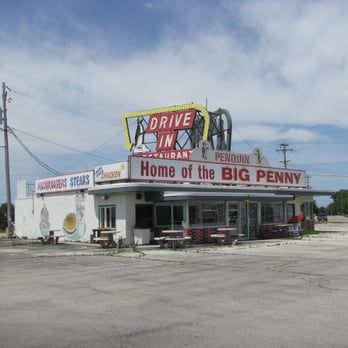
Growing up, there was a drive-in eatery on the outskirts of town ... The Penguin! They served phosphates. I'd ask my parents what those were? I was told the beverages were popular in the 1950s. It was the 1970s. The business model was broken, and they were lumbering along regardless. After all, it was the home of the Big Penny!


The Penguin is not there anymore, FYI.

Oh, it took several decades for the thing to crumble down.

If you are not actively rebuilding every aspect of your business, you are in the process of crumbling down. Just like my couch. I can keep sitting on it ... broken. Or I can choose to make a change. My knees tell me that a change is coming.

In some ways, 2020 - 2022 put everything on hold. Folks had to figure out how to work from home, they had to figure out how to deal with supply chain shortages, they had to figure out how to raise prices in a way that protected the business without greatly offending the customer.

Many things broke during this timeframe. It was easy to ignore everything that broke, because the urgency of other issues overshadowed minor breakdowns.

Well, we're headed to 2024 and now the foundation of many businesses is crumbling. 2024 almost has to be a rebuilding year ... in so many ways. It can't end up being like my couch.


P.S.: If you are in Manitowoc, stop by Late's and enjoy a perch fry. Now, this is the point in the story where somebody will parse the difference between The Penguin and Late's and say "there's no difference, Late's is still in business, so all is good" ... which of course is utter nonsense. Late's is located next to a park which sits along a beach on Lake Michigan. If you're gonna go the old school route, there has to be a catch ... an exception ... something to complement the old school route.


August 21, 2023

A Grumpy Audience

Or, in the case of network television, no audience.

More on that in a moment.

The year was 2012. I presented my Judy / Jennifer / Jasmine framework at a conference. Back then, Judy was a 59 year old catalog shopper, Jennifer was the hated 43 year old e-commerce customer, and Jasmine was the 27 year old mobile future of commerce. Today, Judy would be 70, Jennifer 54, and Jasmine 38 years old. We'd add a 22 year old Jadyn to the mix.

When I presented Jennifer, the audience hissed ... you could hear it, you could feel the contempt. The fine people of New England had no tolerance for the e-commerce loving persona. When I got to Jasmine, the audience glowed. They loved the catalog-shopping 59 year old ... they loved the 27 year old.

One of our intrepid conference attendees raised his hand, and asked me a question.
  • "Can we teach Jasmine to love paper?"

When you are speaking at a conference, you are part of a show. There's give and take. Push and pull. A quick scan of the audience showed a lot of hope ... they anticipated a favorable opinion. Would this be the moment that the speaker (me) charts a course allowing the attendees to continue doing what they love doing?

No.

I told the audience that every generation creates their own traditions. In the same way that Judy eschewed the "big books" produced by Sears or Montgomery Wards or JCP, Jasmine would eschew what had become traditional e-commerce and would not have any interest whatsoever in print. 

She most certainly fulfilled the prophesy.

It was like popping a balloon.

The audience was grumpy. The audience left unsatisfied.

But this is how transition happens. The old-school audience sticks around, you never acquire the newer audience or you acquire them and lose them. Ask linear television about this dynamic. Two things happen - younger customers "cut the cord" or never watch linear television in the first place ... and then the heavy users all end up being age 50+. Somebody will say "oh look at the numbers for the young people who watched 'show x' on 'network y'" ... but those one-offs are always said and are always meaningless. 

Why do you think ESPN is going through an existential crisis?

We are not going to teach younger people how to embrace traditions. Younger people are going to teach us how the world will change. It's our job to adapt and change, and if we don't do that, we become part of a grumpy audience, don't we?

Share of AOV

Every business possesses a unique relationship between first-time buyer AOV and future value. The relationship dictates exactly how the bran...