April 07, 2014

Omnichannel: Birchbox

Speaking of recurring revenue streams, click here to see Birchbox.

Weirdly, innovation is happening among Baby Boomers, and younger shoppers.

Among Baby Boomers businesses, I've witnessed a ton of innovation designed to squeeze every last dollar from customers who are about to retire. It's all "gaming the pricing system", if you will - it's not remotely a merchandise-centric revolution. Honestly, it's stunning. Not what I would do, but it sure is creative.

Jennifer-centric businesses just seem petrified of Amazon. It's hard to innovate when you're scared ... it's the "Maslow's Hierarchy of Needs" thing.

Jasmine-centric businesses like Birchbox are inventing the future ... most will fail, some will succeed wildly.

None are going to execute the omnichannel playbook as currently prescribed. Instead, they'll create the rules for their generation of customers.

April 06, 2014

Monday Mailbag

As always, you can email your questions (kevinh@minethatdata.com) or sent them via Twitter (@minethatdata) ... the latter seems to be the most popular method.

Today's question comes from Colton:

  • "You probably read that Neiman Marcus is integrating their online and store teams. Do you agree that this is likely to result in a favorable omnichannel outcome?"
My answer - no.

Asking store and online employees to work together is like asking in-laws to spend all their time together, not just at Easter.


I created this thing two years ago, and for good reason ... our industry loves to focus on mechanical, tactical topics. "If we simply aligned stores and online channels, we could be more effective and please our customers."

Barf.

The issue, of course, is that people simply don't get along. We're only human, of flesh and blood we're made, to quote a song from the 80s.

Humans disagree. Sometimes they despise each other. Or they love each other and support ideas for each other that are meaningless to the customer. People hold grudges. They dig their heels in on principle. They don't like it that the online exec gets paid more and is responsible for 1/6th of the sales volume. They don't like it that the store exec gets a car allowance and doesn't have to be on call at 2:45am when the website goes down. Neither exec likes it that the IT executive always tells them "no". Merchants hate everybody for not working hard enough to sell merchandise. Everybody else hates merchants for being arrogant. Nobody wants to partner with the marketer who wants to spend $11,000,000 creating awareness.

Does any of that resonate with you?

Org structures can be a lot like shuffling deck chairs on the Titanic. Org structures do not address the core issues among employees.

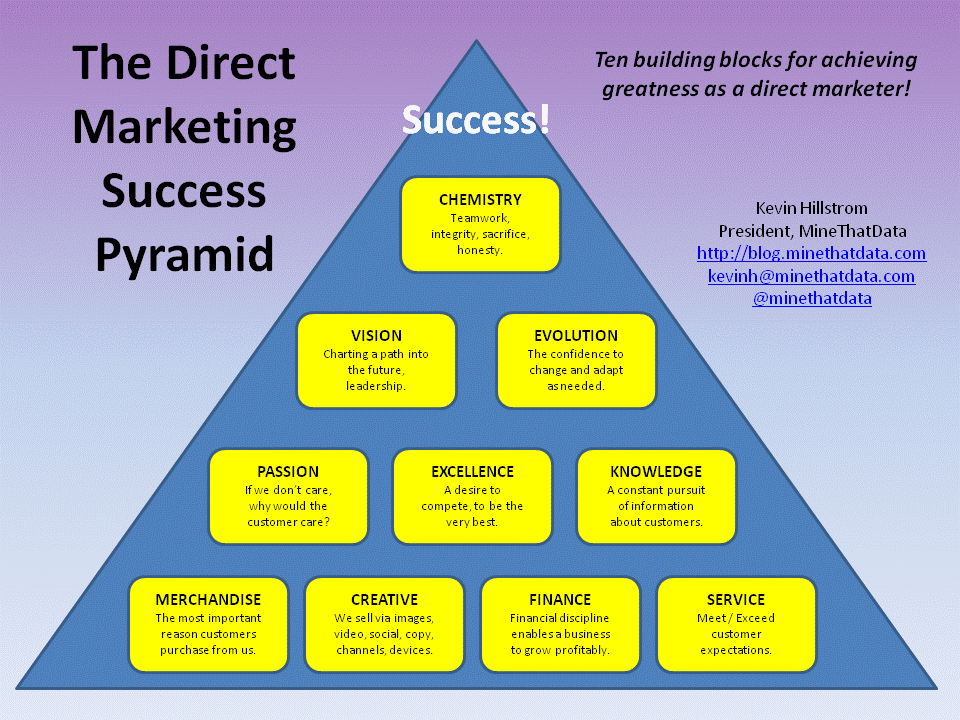
The best "managers" know this. They create circumstances that foster team chemistry. 

It makes no difference how you structure online and store employees. It makes all the difference how gifted managers get people to get along and support each other.

This is what we need to talk about ... people ... not channels.

April 03, 2014

Omnichannel: La Gran Plaza

Give this ditty a read (click here).

How does the last paragraph begin?

  • "Hispanic-Oriented entertainment is a huge component ..."
Entertainment.

Omnichannel is not going to be a sterile concept about using a retail store as a digital fulfillment center for a boring e-commerce website.

Nope.

Retail must entertain. With way, way too much square footage and a modest amount of online competition, there's absolutely no reason for a customer to get in a car, drive somewhere, and be bored out of their minds by products that are readily available on a mobile device anywhere in the world!

Seriously. Think about the message. Jennifer gets in her car on a Saturday afternoon, drives twenty minutes to a local shopping center, finds parking, and makes her way to her favorite Ann Taylor store, where she quickly learns that the Modern Shrug she wanted (click here) is not available in her size. She invested an hour or more of her time to find out that her retail store didn't think highly enough of her to stock her size/color combination ... a size/color combination that was represented to her on the Ann Taylor website just two hours earlier. What is the omnichannel solution? Have a woefully under-compensated sales associate walk over with an iPad and offer to get the item shipped to the customer from another store, from the website, or to have the item available for pickup at another store?

Put yourself in Jennifer's shoes. That's not a solution, that's an irritation!

I know, I know, Ann Taylor should make sure that Jennifer knows on the website that the size/color combination is not available in her local store, so that Jennifer never gets in her car and visits the store in the first place. Yup - that's an operationally elegant solution - but think about it - it's a solution that keeps Jennifer out of the store, and ultimately, reduces store traffic, which reduces store buzz, which causes anybody in the mall to say that "there's absolutely nobody shopping in the Ann Taylor store, why should I bother to go in there?"

That's the cold, sterile path that the current iteration of omnichannel offers us.

At La Gran Plaza, customers are entertained.

We're going to have to figure out how to entertain customers. 

Omnichannel is easy, compared to figuring out how to entertain a customer enough to get the customer to get into a car and drive twenty minutes to a store.

We have to figure out how to entertain a customer.

Entertainment fuels engagement. Engagement is like free marketing. As Glenn Glieber might say ... "I love free marketing!"


April 02, 2014

Omnichannel: BaubleBar

Give this little ditty a read (click here), about BaubleBar opening up pop-up shops in Nordstrom stores.

I know, I know, I'm biased because I once worked at Nordstrom.

Our definition of what "omnichannel" is ... is way, way too narrow, isn't it? We're on the third step of a thousand step journey. So yes, omnichannel is real, don't get me wrong, but it is not what we're being told it is.

I'm hard on words like "omnichannel" and "engagement", largely because they are words that are defined to make consultants and vendors money. But the words are very real for our businesses, especially if we view the words in context.
  • Redefine "omnichannel" as "innovative selling".
  • Redefine "engagement" as "entertainment".
Back to BaubleBar. I talk about "innovative selling. Here's an example ... click on this link, where BaubleBar explains how, on Friday and Monday, they secretly mark down an item and you have the opportunity to subscribe via email to get clues delivered to your mailbox. That's a clever marketing tactic, isn't it? They created a reason for customers to visit the website twice a week. That's innovative selling. Opening pop-up shops in Nordstrom stores is also considered "innovative selling". Will it work? Who knows? At least they're willing to take a risk.

Engagement is a byproduct of innovation. If we innovate, then our customers interact with us. We shouldn't strive to manufacture engagement, we should strive to entertain our customers so that they spend money with us (important) and so they are willing to communicate with us and about us (engagement).

April 01, 2014

Omnichannel: Coldwater Creek

By now, you've had the opportunity to read this little ditty about Coldwater Creek preparing to file for bankruptcy (click here).

This just makes me feel really, really sad.

Mind you, the pundits told companies like Coldwater Creek that there were unfettered riches available by going "multi-channel" ... and now, by going "omni-channel" ... sharing "data-driven" arguments like the one below.


So Coldwater Creek followed the prescription, to the letter. A catalog brand branched out into e-commerce, then dove, head-first, into retail ... as they were told to do ... "bricks 'n clicks, right?"

It doesn't look like Coldwater Creek ever experienced the promised "multichannel bonanza". Will the experts take accountability for bad advice?

What does this say about modern-day omnichannel initiatives?

I know, I know, the pundits will say that Coldwater Creek invested poorly, that they mis-timed the market, that their merchandise was the same as what everybody else sold, that there wasn't a buzz in the stores ... blah blah blah blah. Excuses. They'll say it wasn't their fault, they'll say that omnichannel works wonders when you do everything else right. Which, of course, validates the hypothesis that you should focus on everything else, right?!

At the start of 2014, I told you I was going to focus on three things:
  • Merchandise.
  • Service.
  • Story.
I keep analyzing projects where it is very easy to see the merchandising missteps. I doubt this will ever change. It's easy to see +10% or +20% gains achievable via sound merchandising strategies and a solid merchandising / marketing partnership.

And "story" has really evolved for me, in 2014. Story increasingly becomes more centered around "entertainment". If the customer is entertained, then the customer is willing to step away from the computer or mobile device and visit a store. If the customer is entertained, then the customer "engages" with the brand ... engagement is the byproduct of being entertained, it's how we measure that the customer has been entertained (or satisfied).

But the sterile, cold, operations-centric, fulfillment-centric omnichannel story we're being sold? Well, Coldwater Creek offers us yet another data point that customers don't value multiple channels, for if they did, Coldwater Creek would be thriving.

March 31, 2014

Omnichannel: WWE

Give this article about the WWE Network a read (click here) - I know, I know, you don't watch wrestling (neither do I), but the article is important to your future.

Here's where we are headed, folks.

Slowly but surely, we're all being transformed into entertainment networks. We all produce content, always have. But we're heading toward a future where we do more than specialize in just one form of content, and we do more than specialize in one channel of content distribution.

The current day version of "omnichannel" is the first step in a thousand step journey. Unfortunately, we're being told that the one step "is" the journey.

The future isn't to buy on a mobile phone and pickup in a store.

The future is entertainment.

Be honest - it isn't entertaining to buy a soldering kit at Radio Shack.

Be honest - it isn't entertaining to find out that the Lucca Couture Floral Embroidered Tank Dress isn't available in your size at your local Urban Outfitters store, but can be shipped to your home in two days from another store that is too far away for you to drive to. Do you walk out of the store and do a dance after a transaction like that?

It can be entertaining to enter an Apple Store.

It used to be entertaining to enter a Barnes and Noble.

It used to be entertaining to receive a 500 page catalog from JCP.

The future of omnichannel is becoming very, very clear - it's entertainment. It's the "L.L. Bean" Network (LLBN). Or more likely, the Urban Outfitters Network (UON).

But let's use the L.L. Bean Network as a starting point. Instead of videos on the website, you have programs on demand. Instead of buy online, pickup in store, the store becomes an entertainment centers. What does that look like? How the heck should I know? Go walk into a Cabellas sometime and start thinking about what it might look like.

I know, I know, you're saying "but how could L.L. Bean afford that?" You're saying "they aren't staffed to do something like that". You're saying "even if they did what you're suggesting, the odds of it working are only 5%". Yup, I get it.

How much does L.L. Bean spend mailing catalogs a year? Gotta be north of $100,000,000, right?

In other words, the old business model was to spend $100,000,000 with the USPS, Printers, and Paper People in order to facilitate a recurring revenue stream of $250 per customer per year. The new "omnichannel" business model will be to spend $100,000,000 creating and distributing content in order to facilitate a recurring revenue stream of $250 per customer per year.

This isn't any different than what the WWE is doing. In the old days, the WWE hosted events at arenas, those events represented content shown on cable television, and those events fueled the big pay-per-view events that brought the real profit in the door. Now, the WWE is changing the rules, creating their own network - heck, you can watch a match from 1985 on the network. This network is available on your Xbox or Desktop Computer or Tablet or Phone, 24/7/365, for $10 a month. You're pre-paying for the content.

Sound familiar?

How many customers pre-pay for your content?

What? Customers pay for merchandise, they don't pre-pay in retail?

Amazon gets you to pre-pay for content, too (Amazon Prime). And now that you're hooked, the cost of Amazon Prime is going up. Amazon charges you $99 for shipping (and video ... hmmm ... the Amazon Network) ... while we offer free shipping.

Interesting.

You can see the change happening. Startups work on curated subscription services - the goal of course being a recurring revenue stream. On the other side of the spectrum, old-school continuity programs are thriving among customers age 60+, they get a recurring revenue stream from monthly shipments.

We're headed into a world where it is our job to entertain. Maybe it was always our job to entertain. In the 1980s, a 500 page catalog was sufficient to create entertainment. In 1995, the simple act of entering a J. Crew store coupled with a stop at an Orange Julius store was entertaining. In 2005, a functional website was sufficient to create entertainment. In 2015, most of what we'll be doing is boring, listless, dull (requiring discounts/promotions) in comparison to everything else available to the customer. Omnichannel cannot be a sterile, digital customer service solution. It's going to have to be an entertainment network, with each "channel" providing enough entertainment to remain relevant. 

Why do you read this blog? It has to either entertain you or teach you something, because 99% of you don't hire me for projects.

I know, I know. You think I'm nuts. So go ahead and offer your vision of the future in the comments section.

March 30, 2014

Monday Mailbag

Every Monday, I answer your questions ... email me (kevinh@minethatdata.com) your questions.

Today's question comes to us from Brad:

  • "Kevin, you don't address the concept of relevancy very much. Don't you think relevancy is the most important way to engage a customer in a crowded marketplace?"
Look at the image at the start of this post. I was watching a YouTube video about the Wisconsin Badgers and their run to the Final Four in the NCAA Mens Division I College Basketball Tournament. You can make a pretty strong case that, at this moment in time, I am not interested in Marketo's Segmentation and Personalization solution, and I sure don't care about Perfect Audience's sixty dollar credit for Effortless Retargeting.

So yes, relevancy seems to be an important concept.

Take a look at this one ... this is from The Weather Channel.

Help me understand something. I'm visiting "The Weather Channel". Allegedly, these are the "Most Popular" stories on "The Weather Channel".
  • Dog's Heartbreaking Reaction After Rescue.
  • Creepy Abandoned Island.
  • Happiest Cities in the United States are Revealed.
  • Terrifying Close Calls Caught on Camera.
This leads us to a whole set of unique concepts to ponder.

If the most popular articles on "The Weather Channel" are not weather-related articles, then is weather "relevant" to those who visit "The Weather Channel"? And if the answer to that question is "no", then what should Management do with that fact? What do you do when the core proposition of your business (weather) becomes an engagement tool that drives the user to stories about terrifying close calls caught on camera?

Here's another question worth considering ... what do you do when the long-term success of your brand (weather) runs smack-dab into the short-term reasons somebody visits your website (terrifying close calls caught on camera)?

Seriously - what do you do when your "engagement metrics" show that the "most valuable visitors" view articles about Creepy Abandoned Islands? Do you give the customer more of what the customer seemingly wants, in the short-term, or do you give the customer the content that caused the long-term success of your brand (weather), causing your engagement metrics to suffer?

Relevancy is one of those nonsense pseudo-strategic topics that leads us to post stories about Creepy Abandoned Islands on weather websites. Modern marketing is not tolerant of leaving money on the table. When you must accept every dollar that comes in the door, you accept the customers, and the content, that customers who follow the dollars prefer. You're offering short-term relevant content, content that facilitates your descent into irrelevancy. Or maybe not irrelevancy - but facilitating your change into a new stream of content. Who knows?

The Worst Long-Term Customers to Acquire

From tomorrow (November 25) to December 5 ... it might be the easiest eleven days to acquire a customer. You'll give away everything ima...