October 19, 2009

OMS: You Shape The Direction Of Your Brand

Please send me an e-mail message if you'd like for me to send you a copy of the OMS spreadsheet to follow along with our posts.

Do you ever feel like you don't make a difference?

Maybe you are the humble paid search analyst at your company, and your CEO wonders what you're doing with all of those confusing keywords.

Maybe you just had a breakthrough --- you've found one set of keywords that, coupled with outstanding merchandise, cause a breakthrough in conversion rate.

Can you prove your worth to your CEO?

Go to the OMS spreadsheet. Take a look at cells N15 - N27. These are the annual demand totals for each merchandise division five years from now.

Now try this. Go to cell B39, and instead of the value 3,599 that is in that cell, change the cell to "6,599". In other words, you are adding 3,000 new customers, over each of the next five years, to the business, because you did such a great job of finding a set of keywords that, coupled with outstanding merchandise, cause a breakthrough in conversion rate.

Now look at cells N15 - N27. How did the cells differ?

Well, you've increased the value of your business over time, haven't you? Look at merchandise divisions 14 and 21.
  • Division 14 Old Value = $8.9 million. New Value = $9.3 million.
  • Division 21 Old Value = $1.17 million. New Value = $1.23 million.

Each division experienced increases of more than 4%, just from a subtle change in keyword strategy across a few merchandise divisions. Also notice that all merchandise divisions generated some benefit, as customers spilled-over, during the course of five years, from divisions 14 and 21 into other divisions. In year five, the business is $800,000 bigger because of the efforts of one individual, making one or two subtle changes today.

Every online marketing professional is making small improvements, improvements that have long-term consequences. As an industry, we do a terrible job of demonstrating our value, on a long-term basis.

The CEO uses the Online Marketing Simulation environment to understand the value all employees bring to the table. Once we get to see that value, illustrated over time, we make different decisions in the short-term to capitalize on it. Online marketing is taken in a new direction, a more productive direction.

October 18, 2009

Dear Catalog CEOs: Conflicting Messages

Dear Catalog CEOs:

Have you ever received conflicting messages from the marketing community?

Here's an example:

Who is right?

Who cares!!

Our job is to sell merchandise, to provide a compelling offering that results in a customer desiring to have merchandise delivered to her home.

We are one decade into the "Multichannel Era", a never-ending foray into an abyss of channels that have yet to genuinely increase long-term customer productivity or profitability (notice the use of the phrase 'long-term' ... you can prove that everything works on a campaign or conversion basis).

Oh, sure, this sounds like something you might hear from Don Libey, and it does for good reason, because in his comments are embedded fundamental truths.

Seriously, go do a "comp segment analysis", comparing customer behavior in 1999 and 2009. I've done this work for my clients. Customers are not more productive today than they were in 1999. You'll see something that looks like this (comparing 2x $180 - $220 annual buyers in this example, click to enlarge):


Notice that annual repurchase rates, in spite of a dramatic proliferation of marketing channels, have not budged in fifteen years (in this example --- your mileage will vary). And after you adjust spending levels for inflation, you don't see increased spend, either. In fact, after adjusting for inflation, you often see a decrease in spend. Oh oh.

Run this analysis for your business.

My Multichannel Forensics and Online Marketing Simulation projects continually reveal four strategies that lead to success.

  1. You have customers who crave or need the merchandise you sell.
  2. You do an exceptional and cost-effective job of acquiring new customers.
  3. You do a better-than-average job of using human beings to interact with customers.
  4. You exhibit outstanding operational management, not letting pennies leak out of the profit and loss statement.

Master these four things, and you have something! Channels and campaigns are almost meaningless in this context, rendering irrelevant discussions about whether print is dead or about e-mail being dead or about social media being a savior.

October 15, 2009

Gliebers Dresses: Whack A Mole

Welcome to this week's Executive Meeting.

Glenn Glieber (Owner): "... but is business really coming back? I keep hearing that some folks are up 5% over last year, but so what? Last year was a catastrophe. And then I hear that other folks are 5% down vs. last year, like we are. I'm optimistic for 2010. Of course, back in April, I was optimistic for Fall 2009, so who knows. Maybe I'm running out of optimism. And then I hear that Guilt Groupe will sell something like eighteen trillion in merchandise this year, from $0 a few years ago, so maybe the problem is us, maybe our industry is the problem maybe ..."

Meredith Thompson (Chief Merchandising Officer): "Kevin, is that you?"

Kevin: "Yup, it's me".

Roger Morgan (Chief Operations Officer): "What do you think of integrated marketing campaigns, Kevin?"

Kevin: "What do you think of them, Roger?"

Roger Morgan: "Aren't we supposed to integrate all of our campaigns? That's what the marketing literature tells us, right? If we don't integrate the catalog and the website and e-mail campaigns and social media and everything else, customers will abandon us. We have to be multichannel, and we have to make sure everything syncs up perfectly."

Pepper Morgan (Chief Marketing Officer): "And yet, we don't integrate anything, really, and it doesn't seem to hurt us."

Lois Gladstone (Chief Financial Officer): "Or is it the entire reason our business is struggling? We've never integrated anything around here, maybe that's why we're not doing so well."

Meredith Thompson: "I'm not always one to defend marketing, but customers buy from us because I do a good job, not because of some mythical integrated marketing campaign. Customers don't buy because our website and e-mail campaigns and Twitter presence all feature our signature olive color, right?"

Roger Morgan: "Well now, wait a minute. Neptune Research recently did a study and found that e-mail click through rates were 22% higher if print and e-mail and social media campaigns echoed the same marketing themes. That alone tells us that this stuff works."

Lois Gladstone: "Why wouldn't we do a test? Why wouldn't we fully integrate a campaign, like our Thanksgiving Dress Extravaganza on November 9? What would it take to fully integrate a campaign?"

Roger Morgan: "It should be easy. What's the e-mail theme for November 9?"

Meredith Thompson: "That's a clearance e-mail. We need that one to liquidate merchandise."

Roger Morgan: "Let's add a new e-mail campaign on November 10, one that is fully integrated with the Thanksgiving Dress Extravaganza."

Pepper Morgan: "Our customers opt-out at high rates if we go from two to three campaigns a week, so we're not going to do that."

Lois Gladstone: "Ok. Then maybe we could devote the first eight pages of the Thanksgiving catalog to the campaign."

Pepper Morgan: "We already have a dot on the cover of the catalog, and the homepage will reflect the campaign. And we cannot change out the creative of the catalog, that was shot back in July."

Lois Gladstone: "Why didn't we coordinate all of this stuff back in June?"

Meredith Thompson: "Our Thanksgiving campaign last year was just awful, remember? So we elected to go with a dot on the catalog, but focus creative on what worked two years ago."

Roger Morgan: "So this is really a website campaign with a dot on the catalog. There's really no integration to speak of. What kind of message does this send the customer? She gets a catalog with creative from two years ago, a clearance e-mail, and a website that promotes a Thanksgiving Extravaganza. Imagine how confused the customer is? What a terrible customer experience."

Meredith Thompson: "Did we ask Candi Layton back into these meetings? Who says that this is a terrible customer experience?"

Pepper Morgan: "We pay close attention to this stuff because we are marketers. Quick, everybody, tell me right now what Best Buy did last month? What was their marketing theme? How were their campaigns integrated?"

Lois Gladstone: "I have no idea."

Pepper Morgan: "Exactly. Those who demand that everything be integrated are those who are selling solutions that depend upon integration. If we are marketers, and we cannot even remember one single thing about what a behemouth like Best Buy did just last month, then why do we think that our customers are having such a terrible customer experience because we're sending a clearance e-mail on Monday at a time when the website is promoting Thanksgiving?

Lois Gladstone: "But doesn't it make common sense to be more tightly integrated? I think with a little pre-planning and coordination between all of us, everything could be integrated, right?"

Meredith Thompson: "Why is it that Operations and Finance always think they know what the best Marketing and Merchandising strategy is? I mean, so what if e-mail click-through rates are 22% higher in integrated campaigns? Somebody needs to show me that a company, over the course of one or two years, is more profitable because all campaigns are integrated. Until I see that, I'm not signing up for integration. Roger, in everything you have read, all of those case studies, have you found one instance where a company went from 5% pre-tax profit to 10% pre-tax profit only because they perfected this mythological art known as multichannel integration?"

Roger Morgan: "No. But maybe that's because everybody fails so miserably."

Lois Gladstone: "Why, Meredith, are you so against this?"

Pepper Morgan: "I can take that one. The more you integrate a business, the more you squelch innovation and testing and alternative strategies. You integrate campaigns, and you are stuck with a clearance issue. If you integrate campaigns across channels, you ruin the inherent productivity of each campaign. If you integrate campaigns, you have to pre-plan everything a year in advance, so that your least flexible channel, in our case, catalogs, can accommodate integration. And when you do that, you lose the ability to act nimbly in channels like e-mail and paid search and banner ads and social media, because those channels must support the catalog that you planned a year earlier. Maybe that's the problem. Maybe multichannel advocates are clinging to catalog marketing, trying to keep the dream alive, trying to integrate all the upstart channels around the time-honored catalog."

Meredith Thompson: "If you truly pursue an integrated multichannel strategy, you become a slave to the channel that is least able to adapt in a timely manner. At Gliebers Dresses, that channel is the catalog channel. I want to be able to be nimble, to use e-mail and paid search to surgically attack various issues I have. I want to use e-mail to capitalize on the merchandise that is working, or not working, and to not be a slave to a marketing campaign that the former CFO conceived a year earlier that now appears in print."

Roger Morgan: "Kevin, help us, you have to agree with my thesis on multichannel campaigns, right?"

Meredith Thompson: "Impossible, he supports the need to market merchandise in a flexible manner."

Kevin: "I support all of you. Honestly. Multichannel marketing integration is a giant game of whack a mole. On the one hand, you have real-time analytics telling you how to optimize your digital environment at this moment! On the other hand, you have a catalog channel that requires planning six to nine months in advance, and those who have a retail channel face similar long-term planning obstacles. Let me make this very clear. You can never achieve true integration when social media requires real-time decisions, e-mail marketing requires weekly decisions, and cataloging and retailing require six month or greater planning cycles. Any time you try to integrate in one channel, you pound down the mole, only to see a problem arise in another channel."

Meredith Thompson: "Told you, folks!"

Kevin: "No, Meredith. Whack a mole doesn't mean that you don't get hit with the mallet! I think it is the job of the marketing team to have integrated themes, not integrated campaigns. In other words, you support Thanksgiving from November 1 to November 25, let's say. Merchandising, Marketing, Operations, and yes, even Finance work together to make the Thanksgiving season a success. But this means everybody must work together. So Roger, this means all of your call center employees must be 100% behind Thanksgiving, selling it, exciting customers, not acting like drones taking calls. And Lois, this means you have to financially support efforts that are profitable above and beyond the budget, not imposing your will on people to adhere to a budget when people discover profitable strategies at the last minute. You see, multichannel integration has nothing to do with campaigns. Multichannel integration has everything to do with people. And we don't want to talk about getting people, human beings if you will, to work together, so the vendor community uses campaigns as a platform to force integration, forcing us to buy solutions that they offer. And when we do that, all we do is play a big game of whack a mole, always trying to figure out how to put out a fire, never ever achieving perfection. You don't want to achieve perfection via integrated multichannel campaigns. You want to sell dresses profitably. I'd go with integrated themes, and I'd get all employees to be on the same page for each theme."

Glenn Glieber: "Good topic, but again, I don't think we made a single decision that helps us sell a dress in November. I want to challenge every single person in this room to find a 2% solution that helps us increase dress sales by 2% in November. If everybody does this, our business improves by somewhere around 10%. That's what I'm talking about. Now get busy!"

New Homepage And Logo

Please visit http://minethatdata.com for new information and zippy new logo!

October 14, 2009

OMS: Cross-Selling and Up-Selling

Please send me an e-mail message if you'd like to follow along with your own copy of a sample OMS spreadsheet, or if you're looking to work with me on an OMS project.

We read a lot about cross-selling and up-selling merchandise, and for good reason. There's nothing more fun, from the standpoint of a merchant, than adding another item to an order, generating an additional $20 of profit for almost no additional work.

Now, let me ask you a question: Does customer value increase if a customer adds a cross-sell or up-sell item to their order?

Go into the OMS spreadsheet, and type the value "1.05" into cell C7. Look at the demand values for the next five years:
  • Year 1 = $79.7 million.
  • Year 2 = $70.5 million.
  • Year 3 = $66.7 million.
  • Year 4 = $64.4 million.
  • Year 5 = $62.9 million.

Next, type "1.00" into cell C7. Next, type the number "1.05" into cells C5 and C6. Look at the demand values for the next five years:

  • Year 1 = $79.7 million.
  • Year 2 = $72.3 million.
  • Year 3 = $68.1 million.
  • Year 4 = $65.3 million.
  • Year 5 = $63.6 million.

Do you notice the difference?

Getting customers to spend 5% more in one year has the potential to benefit one year.

Increasing customer response by 5% pays us downstream benefits ... in this case, an additional $4.8 million over the next four years.

Carefully analyze the customers who purchase cross-sell and up-sell items, comparing them against customers who have identical characteristics but have not been swayed by cross-sell and up-sell items. Measure the long-term benefit your programs deliver ... are you fundamentally changing customer behavior, or are you enjoying the benefits of short-term profit generation?

October 13, 2009

This Week In Business: New Product Analysis, And Free Code

We tend to focus on marketing concepts that have nothing to do with merchandise ... things like strategic use of the word "new", or "free shipping today only", or the colors and fonts and links and placement thereof on our homepage.

And there's no arguing that you can improve conversion rates by focusing on this stuff. It works. All of it.

I'm here to tell you that you can generate far more profit by focusing on two things.
  1. Understand customer behavior over time, not just within campaigns.
  2. Understand the merchandise that different segments of customers prefer.

This viewpoint is considered heresy by many in marketing. And that's amazing, because the job of a marketer is to get a customer to purchase merchandise, right? It's not the job of the marketer to manipulate the customer into a complex web of conditions and criteria surrounding a free shipping promotion that extracts short-term profit at the expense of a long-term customer relationship.

Allow me to ask you two simple questions.

  1. Do your best customers prefer the same merchandise they've always purchased, or do they love to purchase new merchandise?
  2. Do your prospects, customers who have never purchased from you, trust merchandise you've always offered, or do prospects buy merchandise from you that you haven't previously offered to customers?

If you can honestly answer each question, based on data you've mined from your customer database, then you are well down the path of dominating the competition.

It turns out that every company is different, and that every company has a new/existing product "DNA" that dictates their success.

I worked with an established brand. This business had a loyal customer base that only wanted to purchase the same product, over and over and over. This company would not use "new" in an e-mail subject line, it would be pointless, the customer loved the same stuff they bought ten years ago. Every time this company tried to "modernize the brand", the customer rebelled.

I worked with another established brand. This business had a loyal customer base that craved new product. The more loyal the customer was, the more likely the customer was to deviate from the "same old same old", always desiring the latest and greatest innovations from the brand. Conversely, the new customer, the prospect, the customer who had not purchased before, would only buy the most conservative, best selling items. Clearly, the prospect only "trusted" a small subset of merchandise that the brand had offered for more than a decade. It's not hard to envision a marketing strategy that immediately boosts productivity, based on this knowledge, is it?

Identifying this Customer x Product x DNA issue is critically important. Success in e-mail marketing to existing customers is entirely dependent upon understanding this phenomenon. Success in paid search marketing is entirely dependent upon knowing if new or existing customers use paid search, coupled with merchandise preference (new or existing product), resulting in a properly merchandised landing page. Catalog marketing is entirely dependent upon putting new/existing merchandise in the first twenty pages of the product based on customer preferences.

A fundamental knowledge of these issues allow you to generate more profit than does a mastery of subject line headers, for instance. In fact, anytime you thoroughly understand how customer segments interact with merchandise, you are in a position to dominate the competition. The past decade saw us walk away from this fundamental understanding of our businesses, as we searched for mechanical e-commerce tweaks that didn't increase customer loyalty.

Now it's time for the free (and very simplistic) code. If you want to do a quick-and-dirty analysis to see if new or existing customers prefer new or existing product, then convert the simple SPSS code below to whatever software tool you use. The dataset I'm using has one row for every item the customer purchased over the past ten years. I'm simply analyzing the average "age" of an item the customer purchases (if the item has been available for 10 years, then the item is assigned a value of "10", if it was only available in 2009, it is assigned a value of "1"), by customer spending levels over the past twelve months.

Or send your data to me, and I'll run the analysis for you. Either way, you get the information you need to understand this dynamic!


get file = 'c:\datasets\Kevin_Hillstrom_MineThatData_ItemDetail.sav'.
select if (demand gt 0).
select if (quantity gt 0).
aggregate outfile = *
/break = item_no year
/demand = sum(demand).
aggregate outfile = *
/presorted
/break = item_no
/year = max(year)
/years = n.
select if (year = 2009).
save outfile = 'c:\datasets\dummy.sav'.
execute.
get file = 'c:\datasets\Kevin_Hillstrom_MineThatData_ItemDetail.sav'.
select if (demand gt 0).
select if (quantity gt 0).
sort cases by item_no.
match files file = *
/table = 'c:\datasets\dummy.sav'
/by = item_no.
compute hst_demd = 0.
compute fut_demd = 0.
if (year ne 2009) hst_demd = demand.
if (year eq 2009) fut_demd = demand.
compute yrs_2009 = $sysmis.
if (year = 2009) yrs_2009 = years.
aggregate outfile = *
/break = household_id
/hst_demd = sum(hst_demd)
/fut_demd = sum(fut_demd)
/yrs_2009 = mean(yrs_2009).
if (hst_demd gt 0) hst_demd = 1.
if (fut_demd gt 0000) and (fut_demd le 0100) fut_demd = 0100.
if (fut_demd gt 0100) and (fut_demd le 0250) fut_demd = 0250.
if (fut_demd gt 0250) and (fut_demd le 0500) fut_demd = 0500.
if (fut_demd gt 0500) fut_demd = 0999.
formats hst_demd(f1.0) fut_demd(f4.0).
aggregate outfile = *
/break = fut_demd hst_demd
/cases = n
/years = mean(yrs_2009).
list.
execute.

October 12, 2009

Breaking News: A New Book!!!!

In just a few weeks, you will be among the first to have the opportunity to purchase a new book:

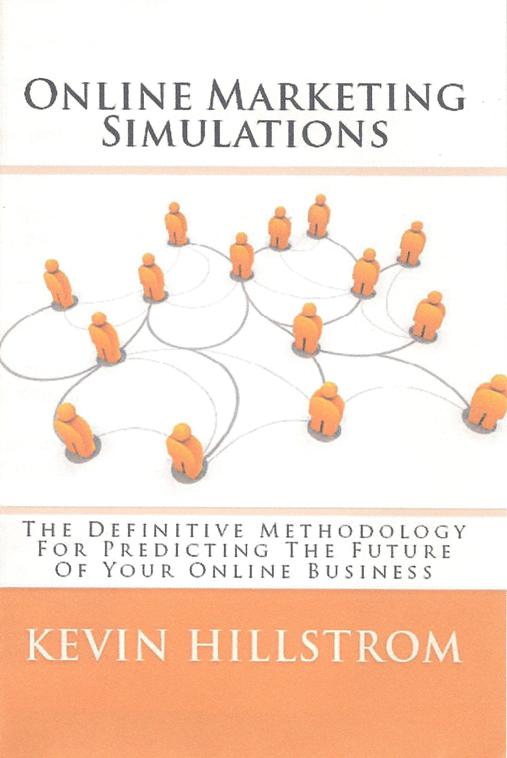
Online Marketing Simulations: The Definitive Methodology For Predicting The Future Of Your Online Business

The book walks you through an example of an e-commerce business with the following characteristics:

  • Seven Advertising Micro-Channels, including Affiliates, E-Mail, Offline Advertising, Print Ads, Paid Search, Social Media, No Defined Source.
  • Five Merchandise Divisions.
  • 240 Analysis Segments.
  • Free Spreadsheet, downloadable from http://minethatdata.com/, to use as you walk through the exercises in the book.
  • SPSS Computer Code required to build the spreadsheet from scratch --- more than 4,000 lines of programming code will be available. If you're an enterprising coder, you'll be able to recognize what I'm doing, allowing you to code the entire simulation in the programming language of your choice.

Within this framework, you will explore all of the ways that Online Marketing Simulations can be used to learn which customers have the best long-term value, allowing you to optimize your marketing campaigns in the short-term for better results. You will also get to see how a business can be calibrated for long-term growth.

The book will be available on Amazon.com. And I listened to you, I heard your concerns about how much a business book should cost. So this time, the price is tentatively set for $19.90. You will be hard-pressed to find content of this nature available anywhere else, much less at that price. Management Consultants might charge a hundred thousand dollars or more for this kind of information. Research organizations would charge $1,495. Seriously. Ask both audiences.

Online Marketing Simulations will be one of my two key consulting project focuses over the next twelve months (the other project focus, of course, is Multichannel Forensics). This topic isn't going away. I'll be happy when I have plenty of consulting projects and the leading web analytics vendors incorporate this methodology into their software offering, so that all of us can easily access this information. I would like to politely ask you to help make that happen, that you ask your software providers to help arm you with the tools necessary to make good long-term decisions. Our industry simply lacks tools that allow really talented analysts to optimize conversion rates in a way that guarantees long-term success.

Content Creation

Here's the link . I realize many of you are stymied by creating content for your customers. Some of you would say the video above is poi...