August 31, 2020

Think About It ... BOAR

In r-commerce (recurring commerce ... big number, small number of brands), the customer pays for Netflix and you pay your ISP or mobile provider money to have the service delivered to you. The customer pays for the merch and the customer pays for delivery. Customer pays x 2.

In o-commerce (omnichannel commerce ... probably another twenty or twenty-five percent of e-commerce controlled by 6-24 brands), the customer pays Best Buy or Dominos for merchandise and then pays Ford for use of a vehicle and pays Chevron for the gas used to get the customer to the store to pick up the merchandise. Customer pays x 2.

In a-commerce (Amazon commerce ... at least a third of e-commerce), the customer pays Amazon for merchandise and pays Amazon for Prime, at which time Amazon sends a van to your house. Customer pays x 2.

In b-commerce (e-commerce in a box ... Shopify / Big Commerce / MailChimp / Etsy / eBay / Marketplaces), the customer plays for the merch and in general the customer is being asked to not pay for shipping (read about Etsy for details) while the small seller is asked to eat the costs and then deal with UPS / FedEx surcharges and mysterious USPS delays. That makes it hard for b-commerce brands to make money.

In what is left of traditional e-commerce, the customer pays for merchandise (often discounted merchandise) and then the brand generally eats the cost of shipping. When UPS / FedEx tack on surcharges, it becomes hard for e-commerce brands to make money.

Given the forces above and the fact that a handful of brands control everything ... it becomes obvious that if you aren't part of the (b) (o) (a) (r) ecosystem you are being left behind, and that's what I'm talking about when I say e-commerce is burning down. BOAR is what e-commerce evolved into. If you are left in the (e) world, you need partners who help you, not ones who extract every last penny from you on the way out.


August 30, 2020

Getting Merchandise To You

Last week I discussed predator / prey models ... stuff like coyotes eating rabbits. The models clearly show that if all the rabbits disappear, coyotes disappear. You have to have rabbits or you don't have coyotes. The ecosystem reaches an equilibrium. It has to.

Modern e-commerce is burning down. Nobody is talking about this, of course, because it would cause everybody to have to think very carefully about the future.

Want proof that e-commerce is burning down?


In a normal year, I'd get a lot of consulting requests. This year, I get questions. Here's the primary question(s) I get now.

  • "What do I do if the USPS cannot deliver packages, if the UPS charges $4 more to deliver packages, and if FedEx puts a cap on how many packages they're willing to deliver? What do I do if the USPS cannot reliably deliver catalogs because of political issues? What do I do if customers want my product in November and nobody will deliver it to the customer?"
That's what it looks like when e-commerce is burning down.

The Executive will say something like "who could have seen this coming?".

That's when I'll mention how Amazon saw this coming and did something about it years ago and now they have more than 30,000 of these vans out there delivering merchandise and if Amazon saw it coming and did something about it how did the rest of the industry miss it?

Then the Executive gets frustrated, because the Executive was looking for sympathy as opposed to pondering how a company will get merchandise to you in the future.

I'll stop there for today. More tomorrow.


P.S.:  "Commerce" is fine, by the way, if you're allowed to be open or sell stuff the customer wants during a pandemic or you sell something the customer needs and you are allowed to sell it. Or you sell something addictive, 'cause dang does that stuff work during a pandemic! 

P.P.S.:  I also get calls that start this way ... "I feel guilty to say this, but we're +27% this year." Happens all the time.

P.P.P.S.:  Your print community is telling you that the USPS is fine, and it may well be fine. Or it isn't. But tell me why you'd believe the print community when they keep telling you that print is making a resurgence (they say this over and over and over again) while the USPS sources the data for this image:


P.P.P.P.S.:  If Amazon is surging, why would e-commerce be burning down? And why would e-commerce be burning down when so many people are doing so well? That topic will be addressed tomorrow.


August 26, 2020

Another Book I Think About Almost Daily

This will probably sound odd, but I think about this book almost daily (click here):


Now, in no way should you read this book ... YOU'LL HATE IT!!! You'll hate the math.

It's the "concepts" in the book that matter.

The book studies stuff like "predator / prey models". I spent nearly every free moment at work in 1998 applying predator/prey models to e-commerce/catalog sales (yes, I ordered each channel to align with predator/prey). It's how I was first able to see that e-commerce was going to destroy catalog marketing and run myriad companies into the ground. The models allowed me to forecast how it would happen, seeing "when" it was likely to happen.

EYE. OPENING!

The book got you to think about, say, coyotes and rabbits. Coyotes need to eat rabbits, so if you have an abundance of rabbits coyotes will eat the rabbits ... and then there aren't enough rabbits and coyotes starve and die and that allows rabbits to breed safely, which brings in an opportunity for coyotes to stuff themselves and the pattern repeats. Equilibrium happens ... it's almost like a sine curve.

Now we have COVID ... stores (prey) closed, while e-commerce (predator) was given an opportunity to go bezerk. And a fascinating thing happened ... e-commerce grew, but it did not save the economy. Jobs were still lost at epic rates, the economy imploded. You'll see how a company like Macy's grew e-commerce while stores were closed, but the net of the two was a catastrophe. You quickly realize that stores are rabbits, and e-commerce needs the stores to fuel customer growth that e-commerce will gobble up as a predator.

The models in this book, written in 1993 ... apply perfectly to our COVID-fueled future. Once we have a vaccine and things return to something "closer" to normal (I don't think we ever return to normal), there will be new predators ... brands unleashed on the world post-COVID ... and the giant retailers (Walmart, Target, others) will become prey. Marketplaces become a way for parasite-based relationships to exist (i.e. your brand pays a toll to have access to customers from the host ... Amazon or Etsy etc.)

Right now there are several areas of thought that are coming together for me.
  • Poker / Probabilities / Betting / Bluffing.
  • Use of play design in football to create "space" ... and how "space" applies perfectly to marketing/analytics/e-commerce/retail.
  • Predator/Prey and Parasite/Host relationships in nature and how those relationships map to e-commerce/retail and will ultimately determine how our post-COVID world works.
  • Pickleball (my fun hobby) and how the concepts above apply to Pickleball ... and consequently, how Pickleball applies to business.
All of these concepts connect me to two realities ... when I simulate the impact of all these ideas on a typical business, there are two realities.
  • You constantly need new customers ... they're the "food" that various channels and product lines consume.
  • You need a Welcome Program to generate enough loyal customers to satisfy the predator/prey and parasite/host issues in your business (i.e. you need new in-store customers who are quickly converted and subsequently migrate to e-commerce).
My simulations repeatedly point to these two concepts as the heartbeat of your brand ecosystem. If you want to manage a great Loyalty Program, well, somebody needs to fuel the program with a constant new supply of new customers who are welcomed and become 2x buyers and begin their journey toward loyalty. Without these programs, you're "hooped".

I wouldn't share this stuff unless I've repeatedly observed it in my work.


August 24, 2020

Current Obsession

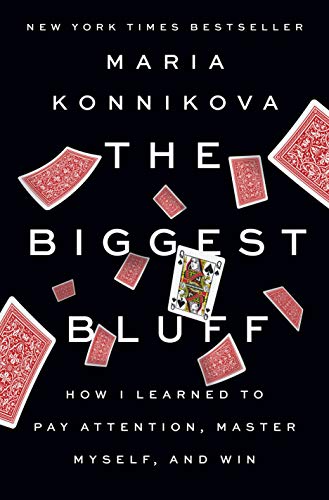
Yup, I've read this book and listened to a dozen podcasts about this book (click here).


Why is it an obsession?

  1. I love poker.
  2. I love probability, which poker is all about.
  3. I love how elements of poker align with business ... bluffing, betting & having a budget.
  4. I really enjoy how somebody with no knowledge of the game was able to become proficient enough at it to make a living better than most of us make at something we've done for decades.
  5. I enjoyed the journey ... playing crappy tables and against average competition and winning ... then sitting at better tables where the buy-ins were more expensive and the competition improved. We just don't do that in marketing/analytics.
The probability observation is probably the biggest obsession ... that you can make all the right decisions and have a bad outcome. Or, you can make all the wrong decisions and have great outcomes ... think of this as the "Macy's Fallacy" of 2014 ... going "all-in" to use a poker term on the omnichannel thesis and then having temporarily positive outcomes ... only to see their "chip count" erode down to nothing ... which is where they are today. They bet, they played terribly, they won via luck, then skill (i.e. commerce skill) won out over time and they lost horribly.

By the way, "betting" in poker directly relates to your "marketing budget". In poker, there are situations where you have half of the chips at the table. There might be a million chips and you have 500,000. The other eight players roughly split 500,000 chips, so they might have +/- $62,500 chips. Say somebody has 100,000 chips. You might have a bad hand, but you can bet 65,000 chips (which doesn't impact you at all) but puts A TON OF PRESSURE on the other player, who now has to decide whether to call, or go all-in, or fold. You get to be a bully. This is what big brands do to most of you. They have a huge marketing budget, and they're making huge bets and you think they're smart and they may not be smart ... they just might be bullying you. Conversely, you are small and you don't have a marketing budget, so you have to "play" your marketing game very differently. Very differently.

In the five-plus months of COVID, I've witnessed my client base play better poker than they've ever played. They've had less information than ever before, and yet they're making better decisions than I've ever seen them make. Why is it that my clients made horrible or safe decisions when business was good, but now that business is unpredictable my client base is making really solid decisions? Well, the answers seem to align with playing poker, in my opinion.

Most important, the book has my mind bursting with thought. If you aren't thinking, you're not going to get much better at business.

In the past three years, this is one of two books that have influenced my work. Here's the other book (click here to buy it).


Both books, interestingly enough, are about outsiders who come into a foreign ecosystem and earn success. The former earned the author a ton of praise without changing the game whatsoever. The latter essentially caused the subject of the book a ton of grief before fundamentally changing football forever.

The applications of both books to the work we perform are self-evident.


P.S.:  In case you haven't noticed, I'm not reading business books. You are free to disagree with me on this topic and that's fine ... I recently purchased a business book about retail from a noted industry expert. The book was well-written, it connected the necessary dots, it charted a course to the future. And through no fault of the author, COVID rendered everything irrelevant. This happens every couple of years in retail / e-commerce, in spite of having a strong set of skills ... your skills become irrelevant SO DARN FAST. We need to acquire skills that come from outside of our industry and then apply the skills with what we know ... in a new way ... like we did when COVID hit.


August 23, 2020

Tilt!

Here's an image from a game of Pickleball.


The team with the peach-colored shirts is already doomed here. The woman in the white hat is, based on the angle of her paddle, going to hit the ball straight into the net or is angling toward the guy in the green shirt ... he'll just push the ball down the sideline past her and earn a point. Sometimes (often) as a consultant you can see the future before your clients see the future.

Meanwhile, it's not fun to lose points. You do everything right and you still lose points. Your opponent is also trying to do everything right, so something has to give. Eventually you get frustrated.

Here's an example. I injured my back playing pickleball. Four bulging discs between L2 and S1. Painful!! It took me eight weeks to rehab back to a point where I could go back out and play just a little bit.

My wife has a group she plays with. She invited me to play one game with them (you typically play six games in a row in our Club ... part of our COVID rules), so somebody sits out the last game so I can get one game in per my Chiropractor. We begin playing, and my body IS ... NOT ... cooperating. Worse, two things happen that get me mad.
  1. The woman my wife is playing with asks me "do you want me to take it easy or to go all out?"
  2. We're losing 9-2 and my wife, whom I'm playing against, says "how about we reset the score at 2-2 so you can play a bit longer?"
These are players I should be able to beat ... but on this day my body won't cooperate ... and much worse, my brain starts to not cooperate. It's the "how about we reset the score at 2-2" comment that sets my brain off.
  • "I'll show them! Reset the score at 2-2. They're gonna pay."
Now I'm looking for juicy, tasty balls that I can smash back at them, as a way of showing my opponents how brilliant I am even though my brain isn't working properly anymore and my body isn't capable of working properly on this non-descript Thursday.

In poker terms, I'm about to "tilt" ... I'm about to act irrationally ... testosterone is about start flowing ... bad decisions are coming.

If you want an example of what it looks like to tilt, watch this poker video (click here).

The first example of tilt happens when a nice, juicy, tasty ball is hit right at me, shoulder height. All I have to do is hit the ball down the middle and it's an easy point. But that's not what I do. My body feels miserable. My mind feels miserable. So I make my life even more miserable by tilting ... I try to hit a cute ball down the sideline, I mis-hit the ball, and it just glides out of bounds.

TILT!!!

Now I'm mad at my opposition, I'm mad at myself, and I'm mad at God for bending the rules of physics for just a brief moment in time.

TILT!!

When you are a consultant, you see clients tilt all the time.

Catalog clients tilt the moment you question the catalog. They suspend all logic and revert into a belief system ... in poker terms, they push their chips into the middle of the table and say ALL IN. They want to bully you into folding your hand. As a consultant, you have your data. You likely have a much better hand than your client has. And yet, you're going to fold a lot of hands and let your client "win" ... no sense pushing the client past the point where the client is comfortable, correct?

E-commerce clients tilt all the time ... "we a/b tested the lifestyle image coupled with 30% off and cart abandonment programs coupled with retargeting and an influencer program on Instagram, that works best ... who are YOU to tell me that doesn't foster customer loyalty?"

You've all seen it happen in meetings ... you challenge the feeble-minded Vice President and he immediately tilts. You tell the CEO that her strategy isn't working and she double-downs on her path. Tell any omnichannel marketing expert that they are wrong and whoooooooo-boy, look out, that individual is about to tilt.

In games, you want your opposition to tilt ... you have a tremendous advantage.

In consulting, you want to bring your clients just to the point of tilting ... once they tilt they no longer listen. But you need to push the client if you want change to happen, so you learn how to push them just up to the point where they're about to tilt ... then you bring them back from the brink.

Your career trajectory depends upon pushing people ... they're not going to change because you tell them to change. You have to nudge them ... and yet, you can't push them to the point where they tilt. This is an art, a skill well worth acquiring.


Marketing Mail Volume

Now that your political interests could be in direct conflict with the political party that supports the USPS (or you might believe something very different - and who knows what to believe), you might want to see what has happened to marketing mail volume over time.


You can clearly see the implosion that happened after The Great Recession ... time will tell what happens following COVID-19. Pundits will offer one viewpoint. But I think we know how this story evolves, don't we?


August 19, 2020

Action Table

A few days ago you saw what I called an "Action Table".

The table helps you figure out where/how you implement your Welcome Program.

First of all, you catalogers should be hearing an endless onslaught from your print vendors about Welcome Programs. Your printer should be helping you create (merchandise-centric) personalized print programs that kick-out on-demand for customers in the green cells. Why wait for the normal cadence when your printer can dynamically offer your customers just about anything??? Figure out what the customer bought, figure out what the customer is likely to buy next, and then create your own pieces on-demand. Get busy!!

Second, your email service providers should be all over you about this. They should be demanding that you implement merchandise-centric personalization, trying to get the customer to try EVERYTHING you offer quickly. If you send out five campaigns a week, the campaigns should be personalized based on what the customer purchased in a first order. You should have 2-3 campaigns per week that TEACH the customer what your big annual events are, what you are trying to accomplish, why you are better than your competition, why the customer is better than other customers (yes, tell the customer they are in the Best Segment ... thank the customer!).

If you have a Loyalty Program and the customer can be a member of the program with $400 in annual spend ... well ... TELL the customer about it. Get the customer moving toward $400 ... give the customer a push.

Put a person in charge of Welcome Programs.
  • Director of Customer Acquisition.
  • Director of Welcome Programs.
  • Director of Customer Loyalty.
Put your digital campaigns (search, social) under the Customer Acquisition person.

Put the majority of your personalization efforts under the Welcome Program professional. You can make a strong argument that email should be under this individual's purview.

Put targeting, email, loyalty etc. under your Customer Loyalty professional

Get busy doing something!!!

Life of an Item

In case you are wondering why I'm talking about items / merchandise more often, this is a process that happens every 3-5 years. Business...